
Ultimate Guide to Caribbean Crewed Charter Destinations
The Caribbean’s top crewed charter destinations compared side-by-side, with pricing, best-fit traveler profiles, and insider picks for first-timers and repeat guests.
Last Updated: October 20, 2026
The global yacht charter market hit $9.30 billion in 2025, and the Caribbean is one of its dominant winter charter regions (Mordor Intelligence, 2025). It’s not hard to see why. Waking up in a different anchorage every morning, a chef already in the galley, no hotel checkout, no rental car: a crewed charter bundles everything into one floating package that no resort can match. But the Caribbean isn’t one destination. It’s five genuinely different Caribbean charter regions, each suited to a different kind of traveler.
The BVI is not the Grenadines. St. Martin is not Antigua. Picking the wrong one doesn’t just mean a mildly disappointing vacation, at $26,000 to $34,000 a week all-in for a mid-size catamaran (Vital Charters rate analysis, September 2026), it means spending serious money on the wrong experience. This guide covers the five best crewed charter regions in detail: what makes each one distinct, who each is right for, and how to choose based on your group, your budget, and what you actually want from a week on the water.
What Is a Crewed Charter: and What Does “All-Inclusive” Actually Mean?
A crewed Caribbean charter runs $26,000 to $34,000 per week through the middle half of the all-inclusive catamaran fleet, on a median of $31,000 across 162 priced listings (Vital Charters rate analysis, September 2026), covering your professional captain, a private chef, all meals from breakfast through dinner, a standard ship’s bar, fuel, mooring fees, and water toys like paddleboards, snorkeling gear, and kayaks (Vital Charters rate analysis, 2026). That’s the definition of all-inclusive in this context, and it’s why the sticker price is less alarming once you divide it by the headcount.
The fundamental difference between a crewed charter and a bareboat charter is this: you’re a guest, not an operator. You don’t touch the helm unless you want to. You don’t navigate. You don’t provision or cook. The captain plans each day’s route based on your preferences; the chef adapts every meal to the dietary forms you submit before departure. Your only job is to enjoy the boat, the anchorages, and the water.
A 6-guest crewed charter at the $25,000 entry rate works out to roughly $595 per person per day. That figure includes your cabin, every meal, drinks from the standard bar, guided snorkel spots, captain’s local knowledge of hidden anchorages, and water toys on demand. A comparable land-based luxury resort (separate hotel, daily restaurant costs, rental transport, activity bookings) typically costs more per day with less included.
Worth knowing from booking experience: The base charter fee is just the start. Every crewed charter adds crew gratuity separately: typically 15–20% of the charter fee, paid in cash at the end of the trip. Budget this from day one. The CYBA agreement behind most all-inclusive Caribbean charters leaves the amount to your discretion, but a crew that cooks 21 meals, runs all water toys, and navigates your dream anchorage itinerary for seven days has earned every dollar of it.
One more budget note: high season runs mid-December through April, but it rarely adds anything to the published rate. Of 522 Caribbean yachts listing both seasons, 280 quote the identical number (Vital Charters rate analysis, September 2026). May and early June are worth considering because the trade winds hold and the anchorages empty out. The published rate rarely drops, but promotional specials concentrate in these months, so ask what is running.
How to Choose the Right Caribbean Destination for Your Crewed Charter
The right Caribbean destination for your crewed charter depends on three factors in this order: sailing style and pacing preference, group composition, and budget. Since a crewed charter removes skill level from the equation entirely, your captain handles navigation, the deciding question shifts to what you actually want to experience each day.
Here’s the quick-pick framework: choose the BVI for maximum sailing structure and social stops. Choose the USVI if US-direct flights and no passport matter. Choose the Grenadines for remote, unspoiled sailing with serious natural beauty. Choose Antigua for history, uncrowded anchorages, and couples-focused itineraries. Choose St. Martin for cultural depth, French-Dutch cuisine, and the best gateway to neighboring islands.
Every one of these grounds is bookable through Vital Charters, and one rule applies to all of them: don’t charter during hurricane season. The Caribbean hurricane season runs June 1 through November 30, peaking in September and October (NOAA). Every reputable broker will say the same thing: book December through April for the most reliable trade winds, lowest storm risk, and best underwater visibility. May and early June work well as shoulder months.

| Destination | Charter Style | Best For | Skill Level | Peak Season | Cultural Richness |
|---|---|---|---|---|---|
| BVI | All-inclusive crewed | First-timers, families | Any | Dec–Apr | ★★☆☆☆ |
| USVI | Similar to BVI | US travelers, no-passport | Any | Dec–Apr | ★★★☆☆ |
| Grenadines | Market rate | Adventure, wildlife | Intermediate | Dec–Apr | ★★★★☆ |
| Antigua | Market rate | Couples, history | Any | Dec–Apr | ★★★★☆ |
| St. Martin | All-inclusive crewed | Culture, value | Any | Dec–Apr | ★★★★★ |
| Bahamas | All-inclusive crewed | Experienced adventurers | Advanced | Nov–May | ★★☆☆☆ |
All six destinations are served by the same crewed catamaran fleet, and that is the single most useful thing to know about charter pricing. Here is what a week actually costs in each, measured two ways.
| Cruising ground | Priced crewed listings | Share that are motor yachts | Median week, every hull pooled | Median week, 50-59 ft all-inclusive catamaran |
|---|---|---|---|---|
| British Virgin Islands | 337 | 13% | $38,000 | $31,000 (137 listings) |
| US Virgin Islands | 172 | 17% | $34,000 | $30,000 (73 listings) |
| Leewards: St. Martin, Antigua, St. Barts | 199 | 23% | $51,194 | $31,000 (49 listings) |
| Windwards: the Grenadines | 166 | 18% | $48,675 | $28,000 (43 listings) |
| Bahamas | 205 | 76% | $89,100 | $31,000 (20 listings) |
High season 2026-27, all-in weekly cost: the listed rate with APA added where the yacht charters plus expenses. VAT, port fees and the crew tip sit on top, and unspent APA comes back to you at the end of the week Vital Charters rate analysis, September 2026).
Why Is the BVI the World’s Top Crewed Charter Destination?
The BVI is home to the Caribbean’s largest, most modern charter fleet, and in our experience as brokers, the region’s most charter-developed sailing ground. The destination welcomed 1,092,139 visitors in 2024, up 9.8% from 2023 (BVI Government via Virgin Islands Daily News, Jan 2025). That growth isn’t accidental: it reflects decades of investment in exactly the infrastructure that makes a crewed charter work. The territory’s official tourism authority is the BVI Tourist Board.
Steady easterly trade winds blow between November and May. No passage between anchorages exceeds 15 nautical miles. Your captain can run a full day’s sail in under three hours, anchor by noon, and have snorkeling, swimming, and happy hour sorted by 2 pm. That rhythm (sail a little, explore a lot) is why the BVI works so well for first-time charter guests and multi-generational groups.
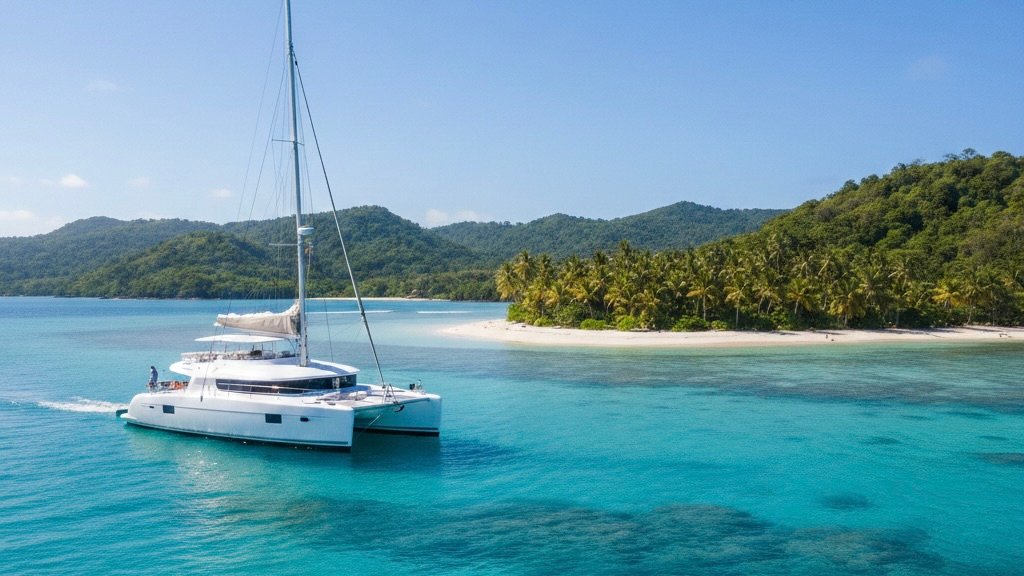
The BVI’s social infrastructure is equally dialed-in. The Soggy Dollar Bar in White Bay (inventor of the original Painkiller cocktail), Foxy’s on Jost Van Dyke, and the Bitter End Yacht Club at North Sound are woven into Caribbean sailing culture. The Baths at Virgin Gorda, granite boulders forming sea caves and tidal pools, are among the most photographed natural landmarks in the Caribbean. These aren’t consolation prizes for easy sailing grounds. They’re world-class attractions that happen to sit inside a protected, beginner-friendly sailing zone.
In our experience as brokers, the BVI offers the Caribbean’s largest, most modern charter fleet and its most purpose-built crewed charter infrastructure, steady easterly trade winds, no passage exceeding 15 nm, and a social scene of legendary beach bars and world-class snorkeling sites that no other single charter region replicates.
Best for: First-time charter guests, families with children, groups who want structured fun and legendary beach bar culture with zero navigational stress.
What Makes the USVI the Easiest Caribbean Gateway for US Charter Guests?
Charter activity contributed $133 million to the USVI’s GDP in 2024, and in 2025, the territory was named Caribbean Yachting Destination of the Year (St. Thomas Source, Jan 2025). That recognition reflects what the USVI does better than any Caribbean destination for American guests: remove friction from arrival. The official tourism authority is the US Virgin Islands Department of Tourism, and the territory’s crewed charter fleet is represented by the Virgin Islands Professional Charter Association (VIPCA). US citizens don’t need a passport. Charlotte Amalie airport on St. Thomas receives direct nonstop flights from most major US cities. You can fly in the same day your charter starts.
The sailing around St. Thomas, St. John, and St. Croix gives guests genuine variety without demanding advanced skill from a captain managing complex passages. St. John’s north coast is 60% protected land and sea, meaning anchorages within Virgin Islands National Park feel quieter and less developed than comparable spots in the BVI. Trunk Bay consistently ranks among the most photographed beaches in the Caribbean. The underwater snorkel trail off its beach is clearly marked, family-friendly in the most literal sense.
The USVI’s other practical advantage is proximity to the BVI. Many crews run a combined itinerary: two or three nights at USVI anchorages, then a short crossing to the BVI’s charter circuit before returning. Customs clearance between US and British territory is straightforward and adds only a short stop. It’s the most popular two-destination pairing in the Eastern Caribbean, and for good reason: each leg plays to different strengths.
The underrated angle brokers don’t mention: Because Charlotte Amalie handles more direct US flights than any other Caribbean charter base, the USVI is also the most flexible destination for staggered guest arrival. Groups where some members fly in a day late or leave a day early can manage logistics far more easily here than anywhere else in the region. If your group has complicated travel schedules, the USVI’s flight connectivity is a genuine planning advantage.
Charter activity contributed $133 million to the USVI’s GDP in 2024, earning it the title of Caribbean Yachting Destination of the Year in 2025, the only charter destination offering no-passport entry for US citizens, nonstop flights from major US hubs, and 60% protected national park waters at St. John (St. Thomas Source, Jan 2025).
Best for: US travelers who want no passport hassle, direct-flight simplicity, national park snorkeling, and an optional BVI extension within one charter week.
What Makes the Grenadines the Most Beautiful Crewed Charter in the Caribbean?
St. Vincent and the Grenadines saw a 20.5% increase in tourist arrivals in 2025, with American visitor numbers growing 49.5% year-over-year (Travel and Tour World, 2025). The official tourism authority is the SVG Tourism Authority. A chain of small islands and cays stretches south from St. Vincent to Grenada, only a handful populated: meaning the anchorages are as uncrowded as they are beautiful. This is not the BVI’s social scene. It’s something quieter, rawer, and more memorable.
The appeal is in the contrast. Bequia is a genuine working island with a shipbuilding heritage and locally owned restaurants that haven’t been retrofitted for tourism, plus a proper beach club on Princess Margaret Beach. Mustique is a private island where a small number of villas and two beach bars occupy a strikingly perfect piece of land. The Tobago Cays Marine Park, the authority that manages the archipelago, puts guests directly above one of the Caribbean’s healthiest sea turtle habitats, snorkeling here ranks among the most frequently cited “best experience of my life” moments among repeat charter guests.
Should you consider a one-way charter?
One-way charters through the Grenadines are a distinct format worth knowing: fly into Martinique or St. Lucia, sail south through Bequia, Mustique, Canouan, the Tobago Cays, and Carriacou, and fly home from Grenada. This itinerary covers more distinct cruising ground than any week-long circular charter can, and the southward downwind sailing plays to the prevailing trade wind direction. Many charter guests who’ve done one-way Grenadines trips describe it as the charter format they wish they’d discovered first.
According to 2025 visitor data, the Grenadines’ 49.5% growth in American arrivals reflects a destination entering a new phase of discovery, one where anchorage quality remains exceptional precisely because development hasn’t caught up with demand yet. Guests who charter here in the next two to three years will find the Tobago Cays and Bequia substantially less crowded than comparable BVI stops at peak season (Travel and Tour World, 2025).
Best for: Guests who want uncrowded, unspoiled anchorages, authentic Caribbean island culture, world-class marine life, and a one-way itinerary with real southward momentum.
Antigua: The Eastern Caribbean’s Best-Kept Secret
Antigua receives about 41 inches of annual rainfall and is one of the driest, sunniest islands in the Eastern Caribbean, a distinction you feel day to day on a sailing vacation (Current Results, 2025). Steady trade winds of 15–20 knots run December through April, and the island claims 365 beaches, one for each day of the year. For couples and smaller groups who want genuine variety without a crowd, it punches well above its name recognition.
English Harbour, home to Nelson’s Dockyard, a UNESCO World Heritage Site and the only continuously operating Georgian-era naval base in the world, functions as the charter hub; it sits inside a national park administered by the National Parks Authority, and the island’s official tourism authority is the Antigua and Barbuda Tourism Authority. From there, anchorages fan out in both directions: Carlisle Bay to the south, Nonsuch Bay to the east (considered one of the safest, most sheltered anchorages in the Caribbean), and a string of less-visited beaches along the western coast that see a fraction of the BVI’s peak-season traffic.

Antigua’s positioning as a regional gateway is underused. Barbuda sits 28 nautical miles to the north: a flat, low-lying island with a pink-sand beach that stretches for miles and a frigate bird sanctuary that holds one of the largest colonies in the Western Hemisphere. Guadeloupe lies 30 nautical miles to the south, offering French Caribbean culture, excellent provisioning, and a dramatic volcanic landscape at Basse-Terre. A crewed Antigua charter with an extension to either island delivers a distinctly different experience from any other Caribbean charter region.
What the brochures skip: Antigua’s Sailing Week, held in late April, is one of the oldest and largest sailing regattas in the world, attracting 150+ race entries and the kind of dock culture that turns a marina into a floating festival for five days. Timing a crewed charter around Sailing Week (staying at anchor rather than racing) gives guests front-row access to an event that’s genuinely unlike anything else in Caribbean yachting. Charter availability tightens significantly in the two weeks around the event; book well in advance if this appeals.
Antigua receives about 41 inches of annual rainfall (one of the driest, sunniest islands in the Eastern Caribbean) with steady easterly trade winds from December through April and 365 named beaches. Nelson’s Dockyard at English Harbour, a UNESCO World Heritage Site and the only continuously operating Georgian-era naval base in the world, anchors a charter circuit that reaches Barbuda (28 nm north) and Guadeloupe (30 nm south) within a single week (Current Results, 2025).
Best for: Couples, honeymoons, guests who want historical depth alongside sailing, and anyone looking for quality anchorages without BVI peak-season density.
Why Is St. Martin the Best Value Crewed Charter Hub in the Eastern Caribbean?
St. Martin attracts more than 20,000 yacht visits annually, generating $165 million in economic impact and accounting for 11.1% of the island’s total GDP (Economic Impact Study of St. Maarten’s Yachting Sector). St. Martin has a long-standing reputation as the better-value charter base, and the rate data does not support it, because there is no BVI premium to escape. Measured like for like, a 50 to 59 ft all-inclusive catamaran medians $31,000 for the week in the Leewards and $31,000 in the BVI (Vital Charters rate analysis, September 2026). The saving people remember is real but it is ashore, not afloat: the French side eats and drinks for markedly less than the equivalent evening in the BVI. Choose St. Martin for the food, the two cultures and the position, not for the charter rate.
Three official bodies cover the one island, which tells you most of what you need to know about it: the St. Maarten Tourist Bureau on the Dutch side, the Office de Tourisme de Saint-Martin on the French side, and the Réserve Naturelle Nationale de Saint-Martin, which governs the anchorages along the northeast coast. What sets St. Martin apart from every other charter base isn’t price. It’s the island’s dual French-Dutch identity layered onto a 37-square-mile piece of land with 37 beaches. The French side of the island hosts restaurants that hold their own against serious Paris dining, not beach bars with fancy menus, but genuinely accomplished cooking with proper wine lists at anchorage-accessible distances. The Dutch side runs 9 marinas and processes customs clearance quickly. Your captain can rotate the itinerary to exploit both sides across the week.
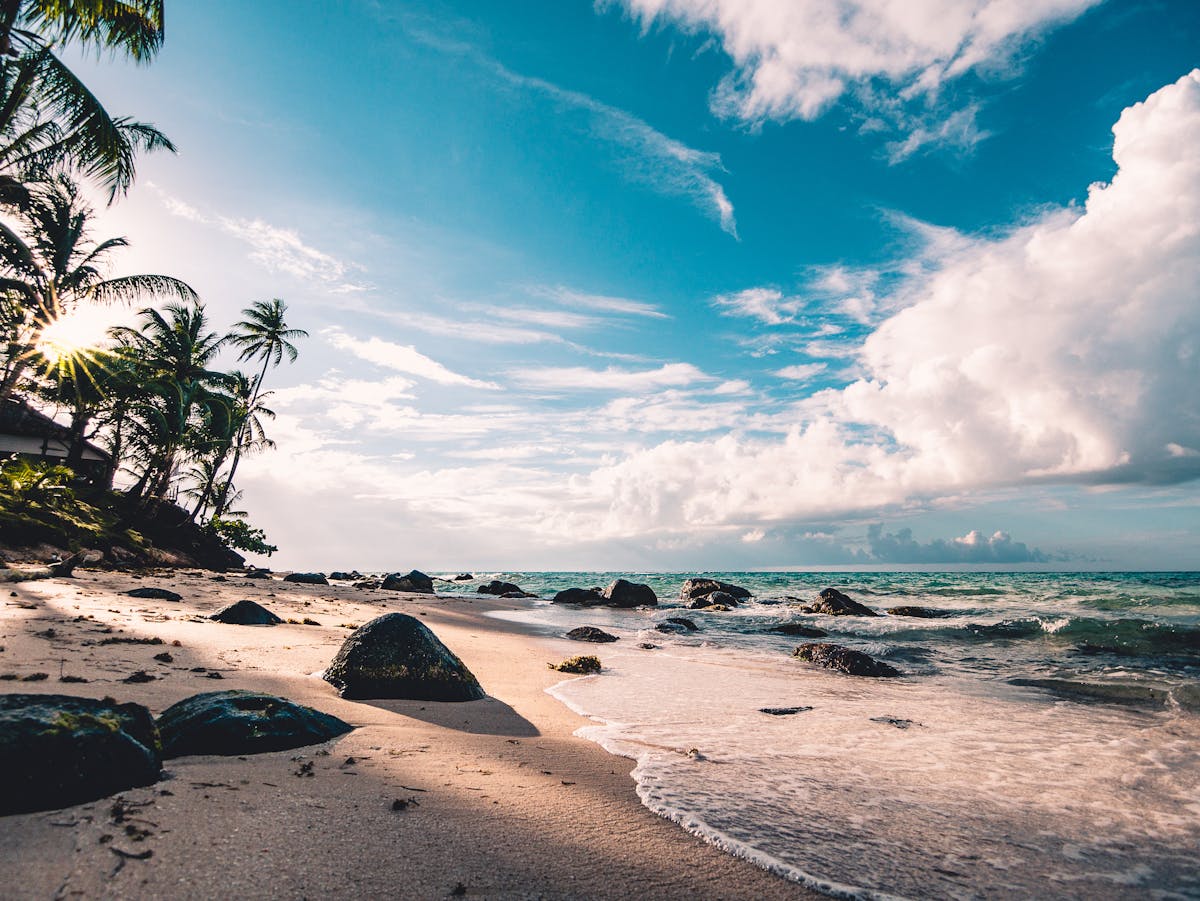
The hub-and-spoke island network around St. Martin is the feature no other Caribbean charter destination fully replicates. Anguilla sits 8 nautical miles north: understated luxury, some of the finest beaches in the Caribbean, and a quieter pace that feels deliberately unhurried. St. Barths lies 15 nautical miles southeast: French sophistication, excellent provisioning, and a social scene calibrated to the yacht crowd. Saba, the dormant volcanic cone, rises dramatically from the sea 25 nautical miles southwest. A week out of St. Martin can visit four distinct destinations, clear two sets of customs, and deliver a cultural range that no other single charter base approaches.
With 20,000+ annual yacht visits generating $165 million in economic impact, St. Martin supports 9 Dutch-side and 2 French-side marinas equipped to handle most mid-charter repairs, a practical advantage guests notice only when something needs fixing, and are very glad of when it does (per the Economic Impact Study of St. Maarten’s Yachting Sector).
Best for: Guests who prioritize food, wine, and cultural depth. Groups who care about the dinner as much as the sailing. Budget-conscious charterers who want a crewed experience without paying BVI peak-season rates.
Who Should Choose the Bahamas for a Caribbean Crewed Charter?
The Bahamas stretches 700 islands and 2,400 cays across 5,358 square miles of Atlantic and Caribbean water (Government of The Bahamas). It welcomed 11.22 million visitors in 2024, a record, but the vast majority were cruise passengers (Bahamas Tourism). The out-island anchorages see a fraction of that traffic. Passages between island groups run 50 nautical miles or more across open Atlantic water, meaning your captain earns their daily rate in a way they simply don’t in the BVI.
That effort unlocks the most singular experiences in Caribbean sailing. Swimming with wild pigs at Pig Beach in the Exumas. Snorkeling above nurse sharks at Compass Cay. Exploring ocean blue holes that plunge hundreds of feet straight down. The Exumas alone, a 120-mile chain of cays south of Nassau, reward repeat visits for years without repetition. The Bahamas is also the most fishing-focused charter destination in the region. Bonefishing in the flats around Andros is considered world-class by anglers who travel specifically for it.
The Exuma Cays Land and Sea Park, a 22-by-8-mile no-take zone managed by the Bahamas National Trust, produces some of the Atlantic’s most pristine coral. Norman’s Cay, the Thunderball Grotto at Staniel Cay, and Pig Beach cluster within a single 60-mile corridor your captain can cover in three days. That density of genuinely one-of-a-kind experiences is hard to match anywhere else in the Caribbean. The catch: reaching them requires committing to real open-Atlantic passages from Nassau, often overnight.
The tradeoff is everything the BVI makes effortless. The Bahamas’ provisioning options in the out-islands are sparse. Your chef will front-load supplies in Nassau before departure because restocking mid-cruise is genuinely difficult. Anchorage density drops sharply once you’re south of Nassau. Services are fewer. The remoteness is the point. If that’s what you came for, it’s spectacular. If it sounds like it might get isolating, it probably will.
Best for: Groups with adventurous appetites, fishing enthusiasts, guests who genuinely want remote isolation and are comfortable trading infrastructure for scale. Not recommended for first-time charter guests: not because it’s unsafe, but because the BVI will simply deliver more of what first-time guests tend to value.
Crewed Charter Planning Checklist: 8 Things to Arrange Before Departure
Getting the most out of a crewed charter starts well before you board. The difference between a good week and a genuinely exceptional one often comes down to how well the crew is briefed. Your captain and chef can’t read minds. Here’s what to handle in the weeks before you depart.
1. Book 6+ months ahead for peak season. Christmas, New Year’s, and spring break weeks fill first. Waiting until September to book a January charter is too late for the best boats. Shoulder season (May–June) has more flexibility but still benefits from advance booking.
2. Submit your preference forms thoroughly. Every reputable charter company sends detailed forms covering dietary restrictions, allergies, food preferences, cocktail and wine preferences, activity priorities, and music. Fill these out in detail. The chef builds your provisioning list from them: vague answers produce generic meals. Specific answers produce remarkable ones.
3. Brief your chef on the meals that matter most. If a birthday dinner on night three is the emotional centerpiece of the trip, say so explicitly. If one guest keeps kosher or is vegan, the chef needs to know the specifics, not just the label.
4. Build your water toys wishlist. Standard inclusions typically cover paddleboards, snorkel gear, kayaks, and often a dinghy with outboard. Some boats offer inflatables, wakeboard setups, or seabobs as add-ons. Confirm what’s aboard and what costs extra before you sign the charter agreement.
5. Plan your route with your captain before departure. Most captains will schedule a pre-charter call or meeting. Use it. Bring your priority anchorages, your “must-do” experiences, and your preferred pace (relaxed vs. a new spot every day). Captains adapt itineraries dynamically for weather, but having a north-star itinerary gives them something to optimize.
6. Arrange travel insurance appropriate for your role as a charter guest. As a guest on a crewed yacht, you’re not operating a vessel, and your coverage should reflect that. Look for a policy that addresses five scenarios:
- Trip cancellation and interruption. Covers non-refundable charter fees if you cancel before departure for illness, injury or a covered travel event.
- Medical evacuation at sea. Helicopter or coast guard evacuation from offshore waters can exceed $100,000 out of pocket, and standard travel policies frequently exclude it. This is the clause to check first.
- Emergency medical coverage. International treatment while sailing in Caribbean waters, including hospital stays in Tortola, Gustavia or St. George’s.
- Missed departure. Flight delays or cancellations that make you miss embarkation day, and the rebooking costs that follow.
- Weather-related interruption. Some specialist marine policies cover a significant forced deviation from the planned route.
What you do not need: hull insurance, skipper liability or third-party maritime liability. Those belong to the yacht’s owner and captain, not to you.
Travel insurance for offshore sailing is a specialist product. Standard annual travel policies frequently exclude helicopter evacuation and maritime medical scenarios. Ask specifically about offshore medical evacuation coverage before purchasing.
7. Budget your crew gratuity explicitly. Fifteen to twenty percent of the charter fee, paid in cash at trip end. A $25,000 charter = $3,750–$5,000 in gratuity. The CYBA agreement leaves it to your discretion, but it’s how professional charter crews make their livelihoods work. Include it in your total trip budget from day one so it doesn’t land as a surprise.
8. Sort airport logistics on both ends. Who meets guests at the airport? Where do luggage restrictions apply (many inter-island prop flights have strict weight limits, often 15–20 lbs per bag)? Soft-sided luggage stows more easily aboard a catamaran than hard-sided cases. If your group is flying from multiple cities, designate someone to coordinate arrival times so the captain isn’t waiting at the dock for staggered arrivals.
Which Caribbean Crewed Charter Destination Is Right for You?
Five destinations, five genuinely different experiences, and a crewed charter format that makes all of them accessible regardless of your sailing background. The BVI delivers the world’s most refined charter circuit: short passages, legendary stops, and the Caribbean’s largest, most modern charter fleet in one organized cruising zone. The USVI removes every American traveler’s friction point. The Grenadines offers the most beautiful, uncrowded sailing in the region. Antigua rewards guests who want history, sunshine, and an uncrowded eastern anchorage. St. Martin grounds the whole experience in food, culture, and a hub-and-spoke island network that punches far above its size.
Key decision framework: First-time charter guests or families → BVI (structured, safe, exceptional infrastructure). US travelers who want zero passport friction → USVI (direct flights, national park sailing, easy BVI extension). Couples or cultural explorers → St. Martin or Antigua (food, wine, history, quieter anchorages). Guests who want remote, unspoiled sailing → Grenadines (uncrowded, one-way itinerary, world-class marine life). Adventurous groups with a seasoned captain → Bahamas (scale, remoteness, singular wildlife experiences)
The Caribbean charter market is growing at 5.2% annually for a reason: more people are discovering that a week aboard, with a captain who knows every anchorage and a chef who knows your preferences, is a genuinely different kind of vacation. The only question is which island you’ll drop anchor off first.
Frequently Asked Questions
Do I need sailing experience for a crewed charter?
No sailing experience is needed for a crewed charter. Your professional captain handles all navigation, seamanship, and boat operation from departure to return. You’re a guest: the only decision-making you’ll do involves which anchorage to visit next, what cocktail to order, and whether to snorkel before or after lunch. Crewed charters are specifically designed for guests with no sailing background.
What’s the best time of year to charter in the Caribbean?
December through April is prime charter season across all Caribbean destinations, delivering the most reliable, steady easterly trade winds, lowest hurricane risk, and best underwater visibility. The Caribbean hurricane season runs June 1 through November 30, peaking in September and October (NOAA). May and early June work well as shoulder months: sailing conditions remain excellent and the anchorages empty out, though the rate itself usually holds, particularly in the BVI and St. Martin.
How much does a crewed Caribbean charter cost per person per day?
The 50 to 59 ft all-inclusive catamaran that most charter parties book medians $31,000 for the week across the Caribbean, and runs $26,000 to $34,000 through the middle half of the fleet (Vital Charters rate analysis, September 2026). Split among 8 guests, the median works out to about $554 per person per day, covering your cabin, every meal, the standard bar, water toys, fuel, mooring fees, and your captain and chef. Add crew gratuity (15–20% of charter fee) separately, and see our guide to yacht charter hidden fees for everything else that lands on top. Compared to a luxury land-based Caribbean resort at $500–$1,200 per night per room, the per-person-per-day rate becomes considerably more competitive.
How far in advance should I book a crewed Caribbean charter?
Book at least 6 months before departure for peak-season weeks (mid-December through April). Christmas, New Year’s, and spring break are booked 9–12 months out by repeat clients on many of the best boats. Shoulder-season charters (May–June) have more availability and can be arranged with 3–4 months’ notice. The best crewed vessels, those with experienced captain-and-chef couples who’ve sailed together for years, fill first.
Can I combine multiple Caribbean destinations in one trip?
Yes, with the right pairing. The most popular combination is USVI plus BVI: close proximity, a simple customs crossing, and complementary character. St. Martin anchors well to Anguilla and St. Barths within a single week without extending the itinerary. The Grenadines work best as a one-way charter from St. Lucia or Martinique south to Grenada. Combining more distant regions (BVI plus Grenadines, for example) requires a two-week minimum to do both justice.
Match your group to the right Caribbean destination.
Share your group size, travel dates, and the islands on your list, we’ll hand-pick crewed yachts that fit your route and budget.